Collectibles Inventory and Market P&L
Purchasing, stock, market price and margin on one line
The core system behind a collectibles trading business: scan to intake, inventory management, market prices that update daily and live profit calculation. In daily use, on real trading data.
- Type
- Inventory system
- Scope
- System design
- Market price aggregation
- AI market intelligence
- Mobile
- Industry
- Collectibles trading
The challenge
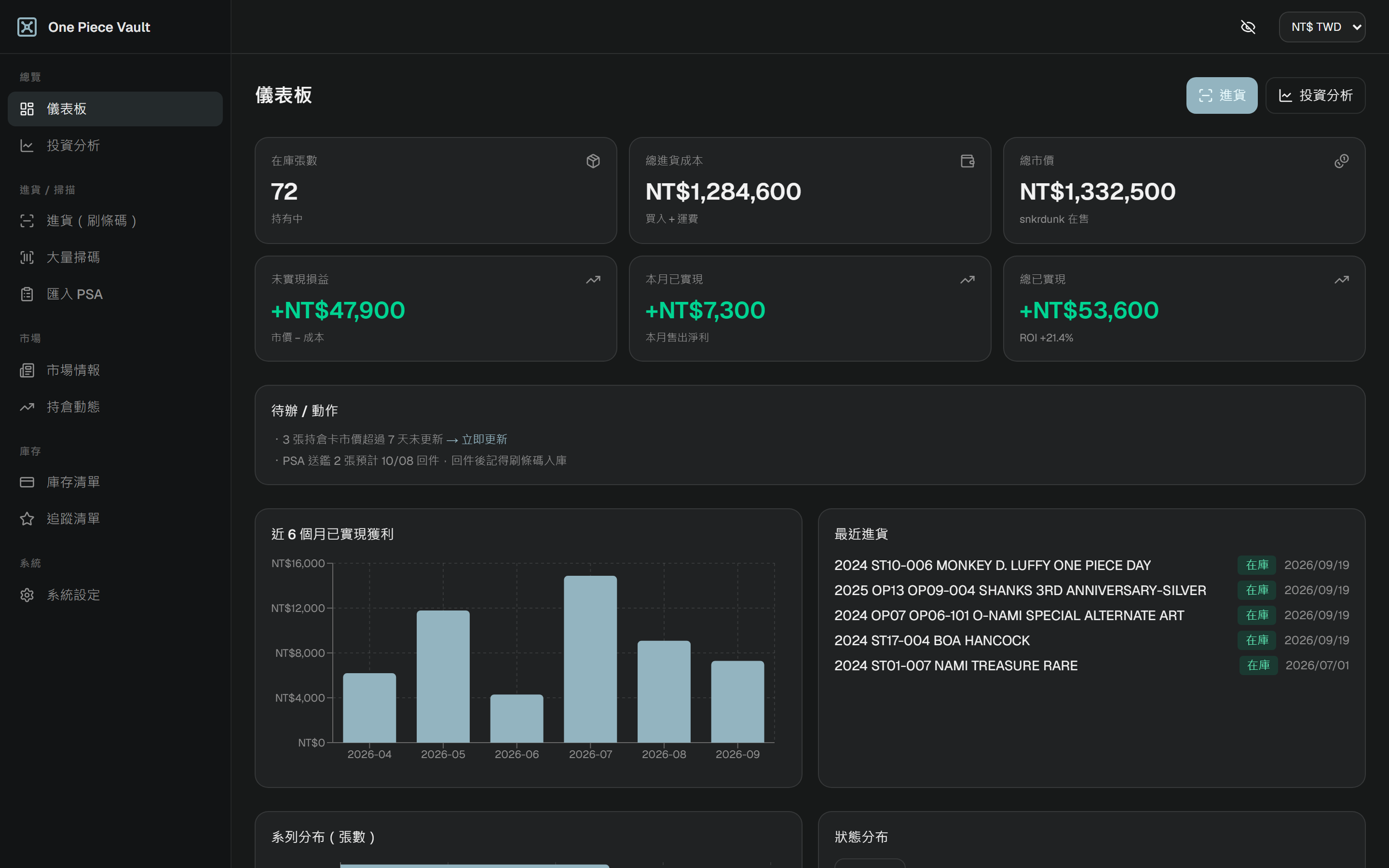
When the goods have a moving market price, bookkeeping is not the hard part. Knowing what the stock is worth right now is. Cost can live in a spreadsheet, but the market moves daily, and without checking you genuinely do not know whether you are up or down. Checking by hand is something people abandon after about two weeks.
What we built
Scan a barcode and the details fill themselves in
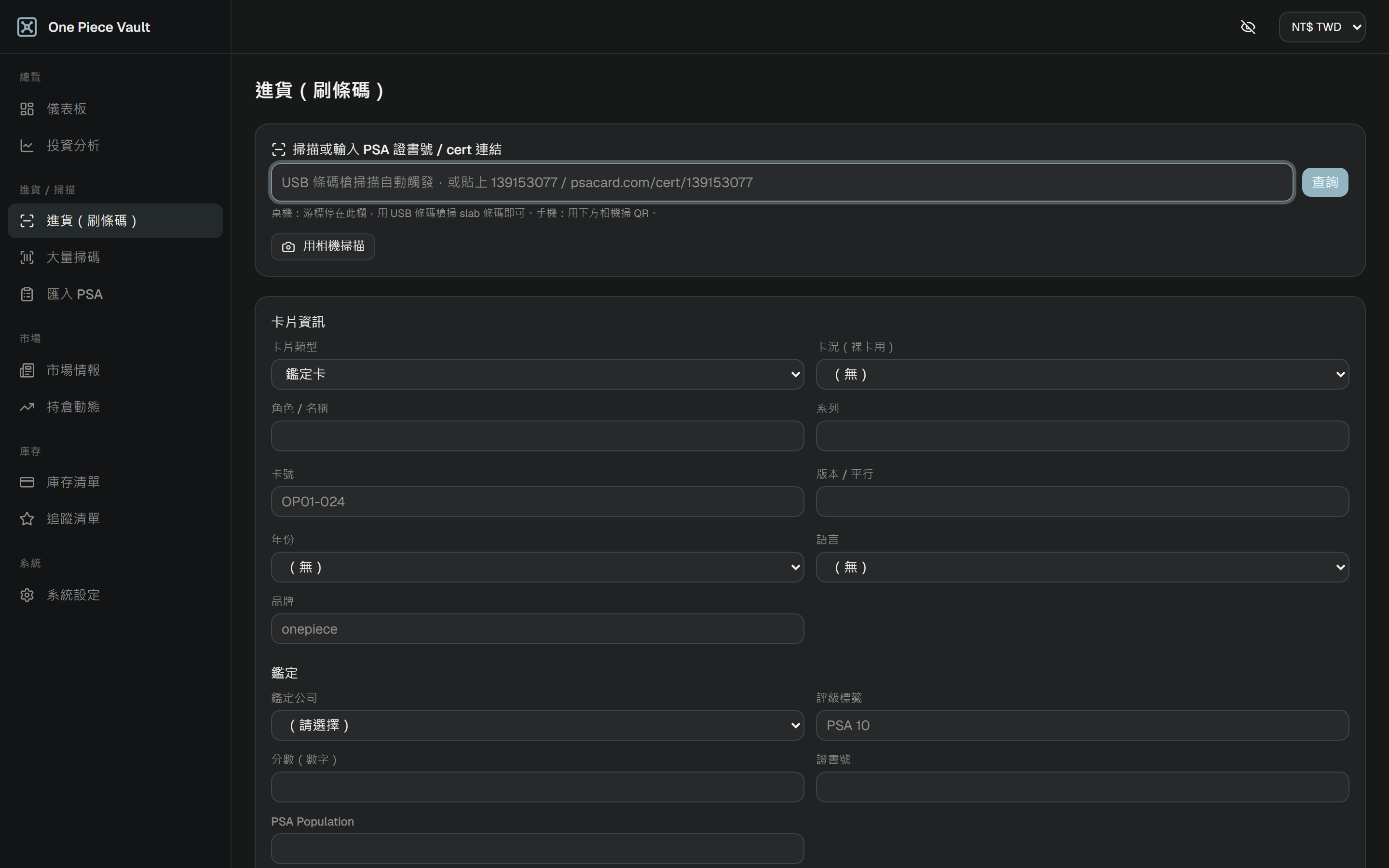
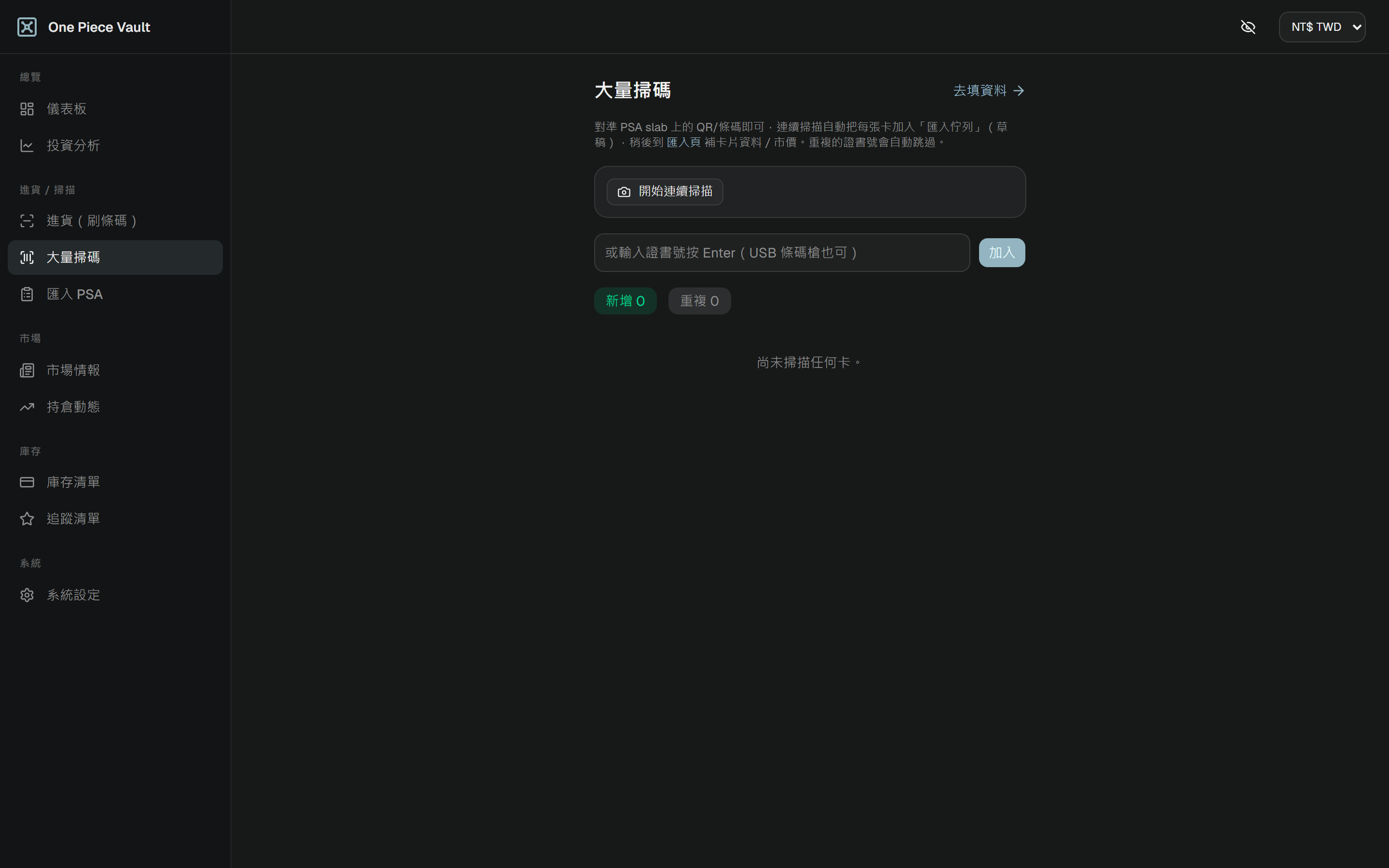
Scan the barcode on a graded card with a phone and the system looks up the grading company's public certificate, filling in card name, number and grade; confirm and it is in stock. Whole batches go through continuous scanning, duplicates are skipped automatically, and details can be completed later.
Market prices update every day
Recent sale prices from several trading platforms are compiled automatically each day, with foreign currency converted to NT dollars at the configured rate. What each card is worth now, and whether it is up or down on paper, is there when you open it.
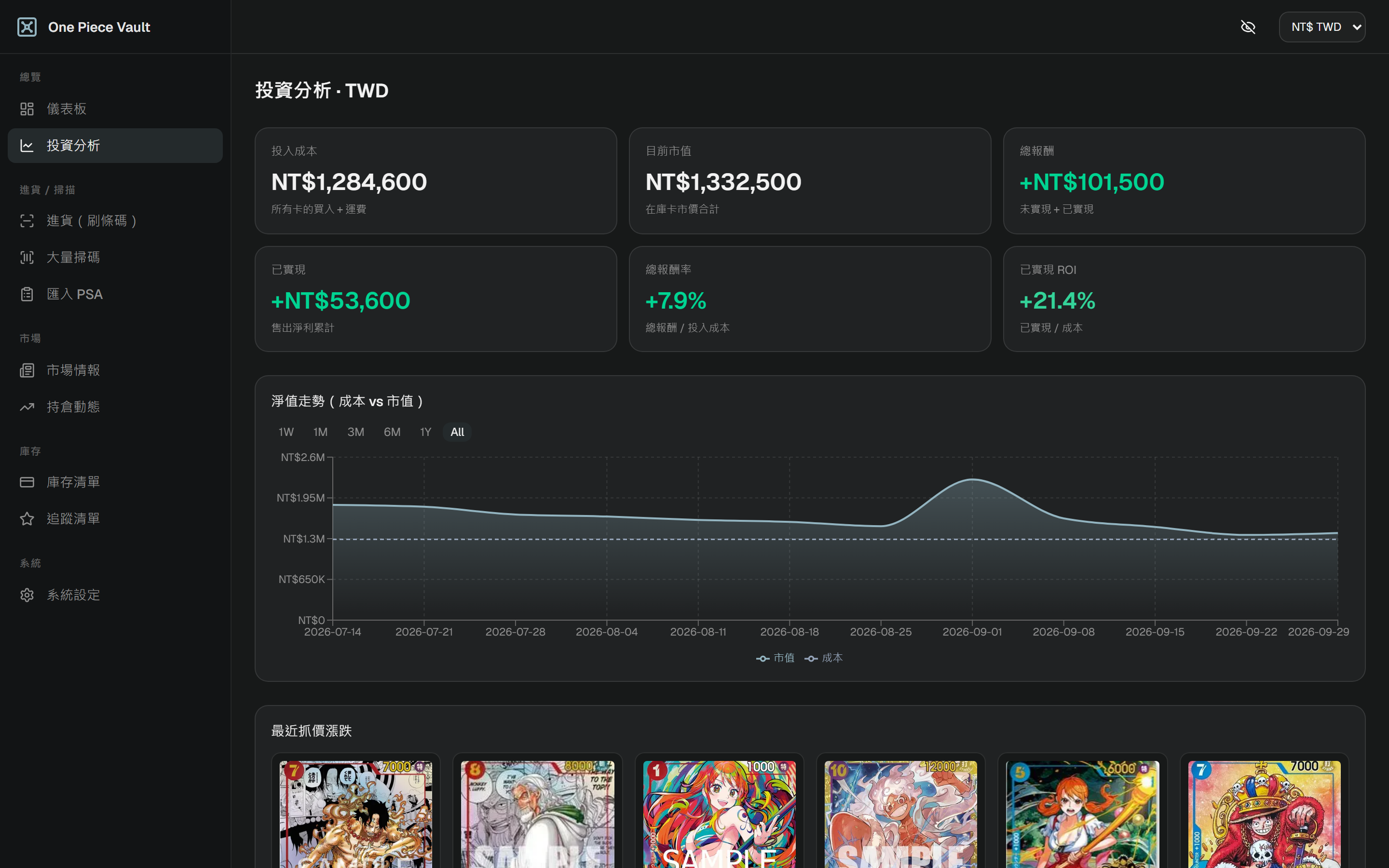
Margin down to annualised return
Realised and unrealised margin are calculated separately, and return is annualised using the actual dates of purchase and sale, so stock held for three months and stock held for a year can be compared fairly.
News about what you hold, sorted automatically
The system regularly collects community discussion, videos and official announcements, matches them against the cards in stock, and files relevant items under each card. At the press of a button, AI researches recent market movement and saves an analysis report in the system.
Target prices for cards you want
A watch list holds a target price for each card you want to buy and highlights it when the market drops below; once bought, it becomes stock in one click.
A back office in your pocket
Installed on the phone's home screen, it reaches your own system while you are out looking at stock, so you can check cost and market price before making an offer - without exposing the system to the public internet. Data is backed up automatically every week.
Want something similar? Tell us how you work today.
Screens
The same approach also works for
Whenever the goods have a price that moves every day, what the stock is worth now and what a sale actually made are the same question. Price sources, product fields and reports are adjusted to your goods and to the public data available. Some directions it can extend to:
Pre-owned watches and luxury goods
Each piece's purchase price set against market value can grow into live stock value and expected margin per item.
Sneakers and streetwear
The same model trades at different prices by size, so cost and sale price can be tracked per size.
Bullion, coins and stamps
Stock value follows public quotes, and each sale's actual return is calculated automatically.
Used cameras and electronics
Units tracked by serial number through purchase, refurbishment cost and sale show exactly what each one made.
Wondering whether a system like this would fit your company?
No specification needed.
Tell us which part of your work takes the most time, and we will look at the right approach together.