Card Grading Platform
Owners can check for themselves, so the shop stops answering messages
A management platform for card grading submissions. Shops manage drop-offs, submission batches, cost and payments in the back office; card owners follow each card through every stage in their own portal, and can submit online.
- Type
- Workflow platform
- Scope
- Back office
- Customer portal
- Deployment toolkit
- Industry
- Trading card grading
The challenge
Card grading is a slow business. A card leaves and comes back two or three months later. During that gap the shop's biggest drain is not the work itself but answering the same question: where is my card. Managed on spreadsheets, each answer means opening several files - and the owner will ask again next week.
What we built
Owners check for themselves, with a date at every step
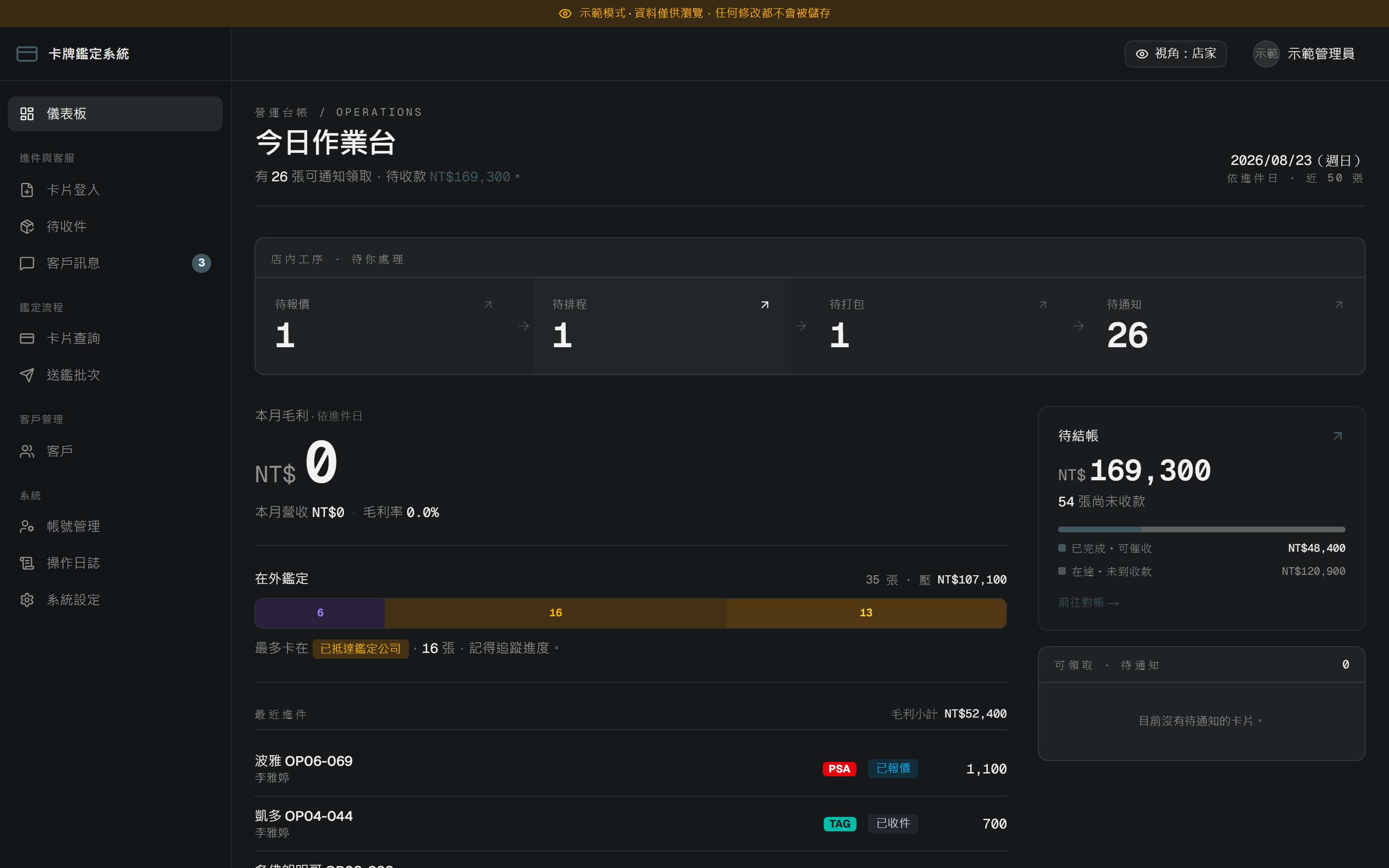
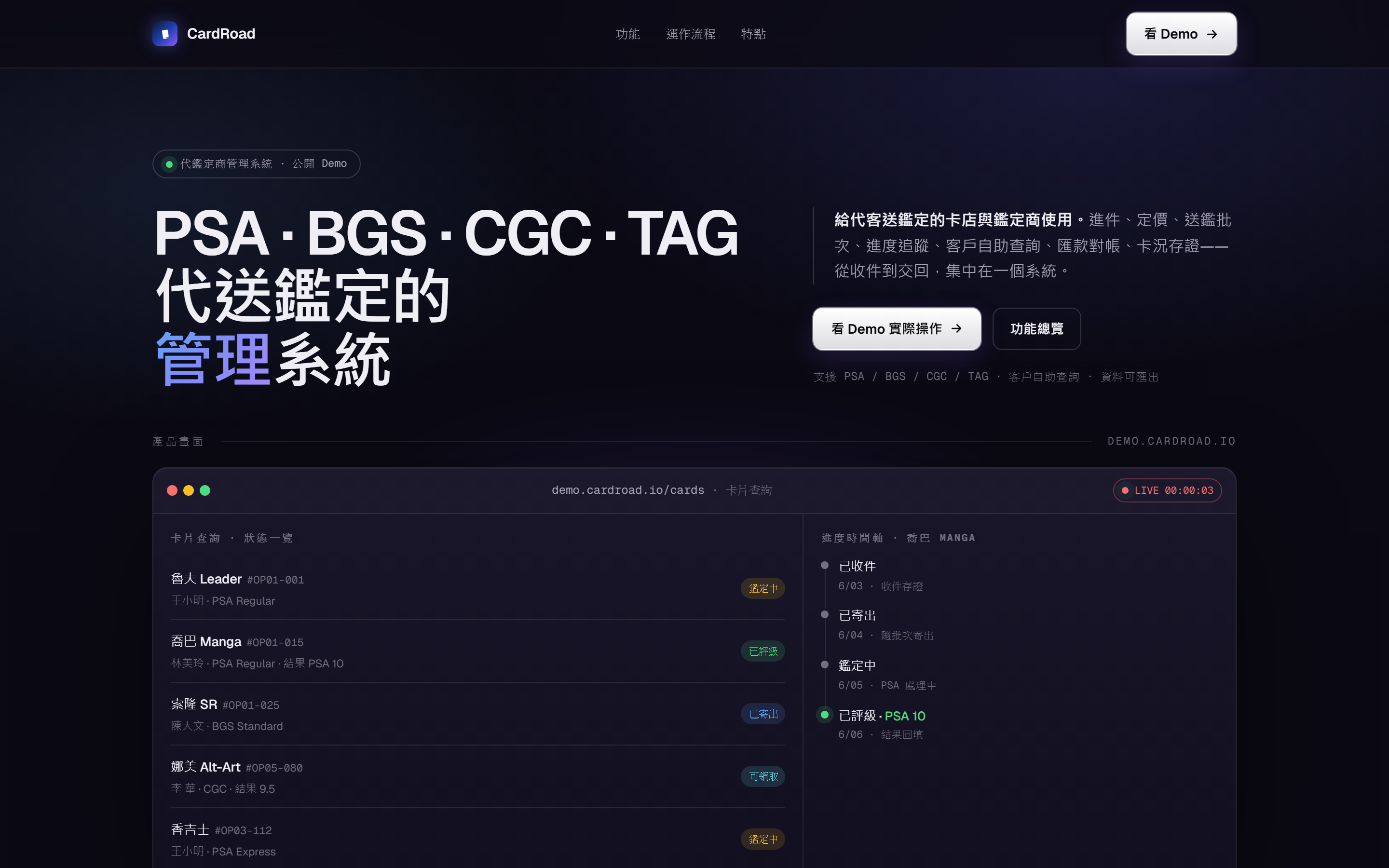
In the member portal, owners see where each card is - received, sent off, at the grader, grading, graded, returned, ready for pickup - with every step dated. The shop advances a whole batch at once in the back office and the owner's view updates with it, so nobody answers messages one by one.
Card condition photographed and agreed at drop-off
Condition photos taken at drop-off appear in the owner's portal, and the owner confirms them so both sides agree on the card's condition. If a question comes up later, the photos settle it.
Owners can submit online
Owners fill in their cards and grading tier online, and the shop simply confirms receipt when the cards arrive instead of typing each one in. Shops can set a discount for self-submitted orders to encourage it.
One conversation per card
Owners and the shop leave messages against a specific card, so questions do not get lost in a chat app, and the back office lists every unread message in one place.
Clear fees, and a clear margin on every card
The tier price is fixed at drop-off, so later price changes never touch cards already received. Value-based surcharges from the grading company are passed through to the owner at cost and shown in the portal. The back office calculates cost and margin per card, with paid and unpaid on one page.
One independent system per shop
Each shop runs its own database and services, with no data shared between them. A backup is taken automatically before every update, with data and condition photos sealed together in encrypted form, ready for a full restore.
Want something similar? Tell us how you work today.
Screens
Adapted to your workflow
The backbone is an item handed to you, sent to an outside party and returned a long time later - with the customer wanting to know where it is the whole time. Any business that collects, forwards and waits on an outside party can use it, with stages, fees and photo records adjusted to how you work. Some directions it can extend to:
Watches and luxury goods sent for servicing
Condition photos before sending and the manufacturer's progress can grow into a service status page customers check themselves.
Electronics and appliances sent for manufacturer repair
When many units go back to the manufacturer in batches, tracking can follow each batch and notify customers when theirs is ready.
Coin, stamp and other collectible grading
Different grading bodies' tiers and surcharges can be set up according to each one's rules.
Document and application services
Multi-stage processes such as submitted, under review, issued and ready to collect can be tracked by customers in the same way.
Wondering whether a system like this would fit your company?
No specification needed.
Tell us which part of your work takes the most time, and we will look at the right approach together.